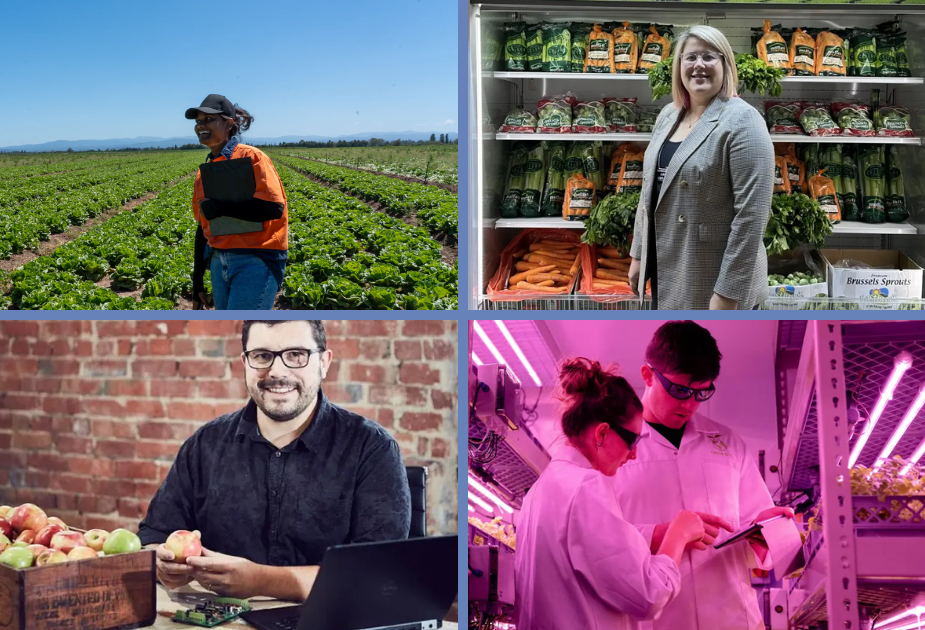
There’s a wide variety of careers to choose from in horticulture. From agronomist to economist, PR consultant to sustainability manager, the industry is a lot more diverse than most people realise.
We asked 10 people who currently work in horticulture what their top piece of advice is for someone considering a career in horticulture. One theme stood out – give it a go!
Daniel Pelliccia, Data Scientist
For young people, if you’re looking for a tech job, definitely look up what opportunities are there in horticulture. I am a technologist, so I would start looking at the opportunities with technology and software providers. Many career paths can lead into this.
Even if you’re just interested in software development or data science, knowing how to code or work with data is a great entry point with technology and service providers.
Tirza Winarta, Economist
Just try it.
I feel like you never know what you like and what you don’t like until you try it so any experience is a good experience, even if you don’t like it that means that you know you don’t like it so you can move on and be in a different industry. And agriculture is so big. So move to another commodity. I think there’s also a lot of transferable skills that could be applied to different commodities as well.
Arman Berkett-Saleh, Irrigationist
For any young people who would like to start a career in horticulture, there’s probably two pathways one can take. The first one is getting out and applying for a job and learning as you go, and then eventually going on to do further studies. If there’s an area within the industry that a person really wants to do, there are plenty of opportunities and pathways through TAFE and universities to develop your skillset to get these jobs.
Secondly, there’s no harm in starting work directly on a farm, especially if you’re young. You can gain some understanding of what work is necessary to run a farm and what needs to be done to produce fruit. It’s important to get the experience to know what you’re looking for. You could be running warehouses and doing stocktake or becoming an expert in irrigation and growing plants. Although these are two very different pathways, both provide the same opportunities.
Antonio Fragnito, Mechanic
Schools often push university as the only option, but trades are just as valuable, if not more so. I was never great in a classroom, but working with my hands and problem-solving in real-world scenarios suited me perfectly. Plus, while many university students graduate with debt, I got paid while learning my trade. If you enjoy practical, hands-on work and want a meaningful career, horticulture is an excellent choice.
Lauren Patane, Operations Manager
It sounds simple, but do not be afraid to jump in.
I know so many horticultural businesses are looking for young people who want to work. If you have a strong work ethic, are interested in learning, and are willing to put in the effort, just put your hand up. Most businesses would welcome you with open arms and say, “Come on in.”
I have a university degree, but you definitely do not need one. There are so many training opportunities available, including on-the-job training, internships, traineeships, and apprenticeships. You can gain all the skills you need within a horticultural business.
Additionally, whatever career path you want to take, you can find a role for it in horticulture. There are opportunities in accounting, marketing, sales, mechanical work, and many other areas.
Ossie Wildman, Plant Pathologist
There is a huge range of jobs in horticulture and agriculture more broadly. Speaking from the perspective of plant pathology, there is not really a formally prescribed pathway. However, for my role, completing university studies in microbiology were critical in allowing me to work in the position I do today. As the horticultural and agricultural industry is so diverse, there are a lot of different avenues and courses that someone can pursue depending on their specific interests.
Harriet Watson, PR Consultant
Well a good problem that Ag has is that there are a lot of jobs. I’d say interview for everything, get your name out. If you don’t get the job or even if you don’t really want the job, it is still like such an amazing thing to be able to sit there and go through the interview process, just giving things a crack.
The avenues are out there and sometimes you have to dig, but the scope in Agriculture is so wide, there is something for everyone and something you will love!
Angelo Maggione, Quality Assurance
In terms of working in the horticulture industry, it’s not as hard of a job as it used to be, mainly because we’ve seen an introduction of new technologies, techniques and machinery which helps with, for example, reducing the amount of weight people might carry. As soon as you understand if you like it or not, then go and study. You can study horticulture in a college from Certificate IV to a Diploma, or if you want to step-up into a higher job role, you could study food science or food technology at university.
Lisa Mengel, Supply Chain Manager
I would encourage anyone to have a go, and don’t try and pigeonhole yourself into one specific thing.
Allow yourself to get into it and don’t be too hung up about what you think your future role looks like. Immerse yourself in as much of the industry as you can, understand as much of it as you can. To be well-rounded in this industry is held in high esteem regardless of what role you end up sitting in.
Whether you’re starting a new career, in the middle of your working life or you are wanting to slow down and find something that you can do a couple of days a week, there’s so much opportunity across the industry. That applies to university graduates (or those still studying), trades people, laborers, machine operators, administration staff, supervisory and management people – the list goes on and on. There’s literally a job for everyone.
Vanessa Russo, Sustainability Manager
Start with any role in horticulture to understand the business as a whole. Once you’re in sustainability, engage with all departments to see how their processes and decisions impact sustainability. Understanding the entire operation is key to making meaningful changes.